High-Piled Storage
Specialized fire protection strategies for high-volume warehouses where storage height and commodity complexity drive design requirements.
Request a Quote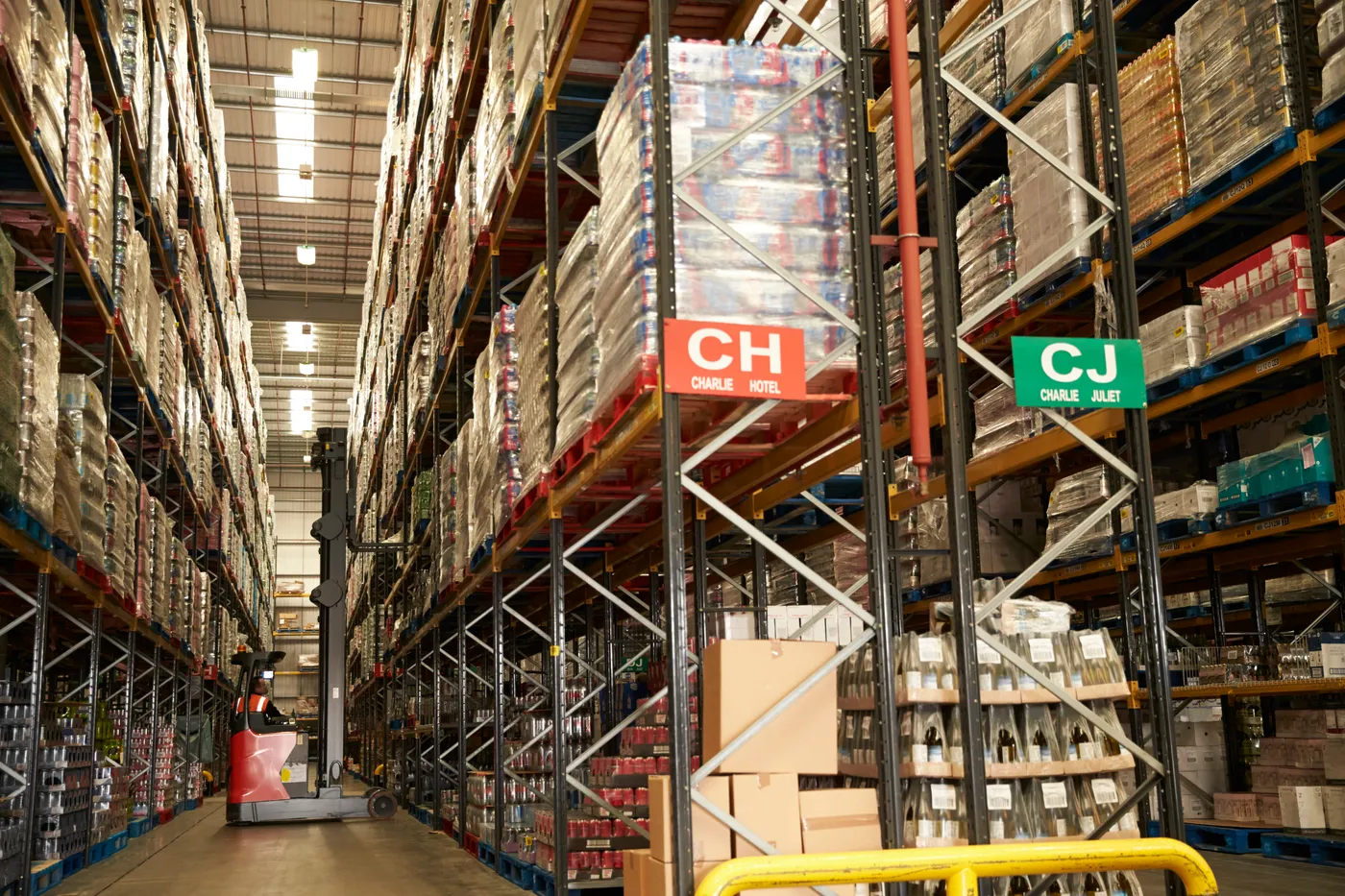
What is high-piled storage protection?
High-piled storage protection refers to the specialized fire sprinkler systems and life safety measures required for storage exceeding 12 feet in height (or 6 feet for high-hazard commodities). Unlike standard occupancy-based designs, high-piled protection is driven primarily by the commodity classification and the specific storage arrangement—such as rack, palletized, or solid-piled configurations.
As storage heights increase, the fire dynamics change rapidly. Systems must be engineered to penetrate high-velocity thermal plumes and deliver water directly to the seat of the fire, often bypassing several levels of racking to reach the lower tiers.
Types of protection approaches
Ceiling-Only Sprinklers
Utilizes high-output heads at the roof level to suppress or control fires without the need for piping within the racks.
In-Rack Sprinklers (IRAS)
Piping installed within the racking structure to provide localized protection at multiple vertical levels.
ESFR (Early Suppression Fast Response)
Fast-response, high-volume sprinklers designed to suppress a fire rather than merely controlling its spread.
CMSA (Control Mode Specific Application)
Specialized large-orifice sprinklers designed to produce large droplets for penetration through high-challenge fires.
Why it matters
High-piled storage presents one of the most significant challenges in fire protection engineering. Our analysis accounts for critical variables that dictate system performance:
-
Commodity classification (Class I-IV & plastics) which drives water demand. -
Storage height, ceiling height, and aisle width clearances. -
Encapsulation (shrink-wrap) and its effect on water penetration. -
Flue space maintenance (transverse and longitudinal). -
Hydraulic capacity of the existing municipal water supply or fire pump.
How Lacuna approaches it
Classify
Rigorous commodity classification to identify the primary fire hazard (plastics vs. non-combustibles).
Analyze
Comprehensive analysis of storage heights, racking types, and building geometry against code requirements.
Design
Selection of optimal sprinkler technology (ESFR vs. CMSA) and hydraulic calculation in Revit.
Coordinate
Drafting High-Piled Storage Plans for AHJ submittal, including technical specifications and signage.
Support
Field verification of installation and support for commodity-specific permit closeouts.
Applicable codes & standards
Lacuna Fire ensures all storage plans are fully coordinated with the local Authority Having Jurisdiction (AHJ).
Where it's used
Protect your inventory and infrastructure.
Our storage specialists will audit your facility's hazard profile within 48 hours.