Automatic Sprinkler
The standard in active fire protection, designed for rapid detection and suppression across diverse occupancy types.
Request a Quote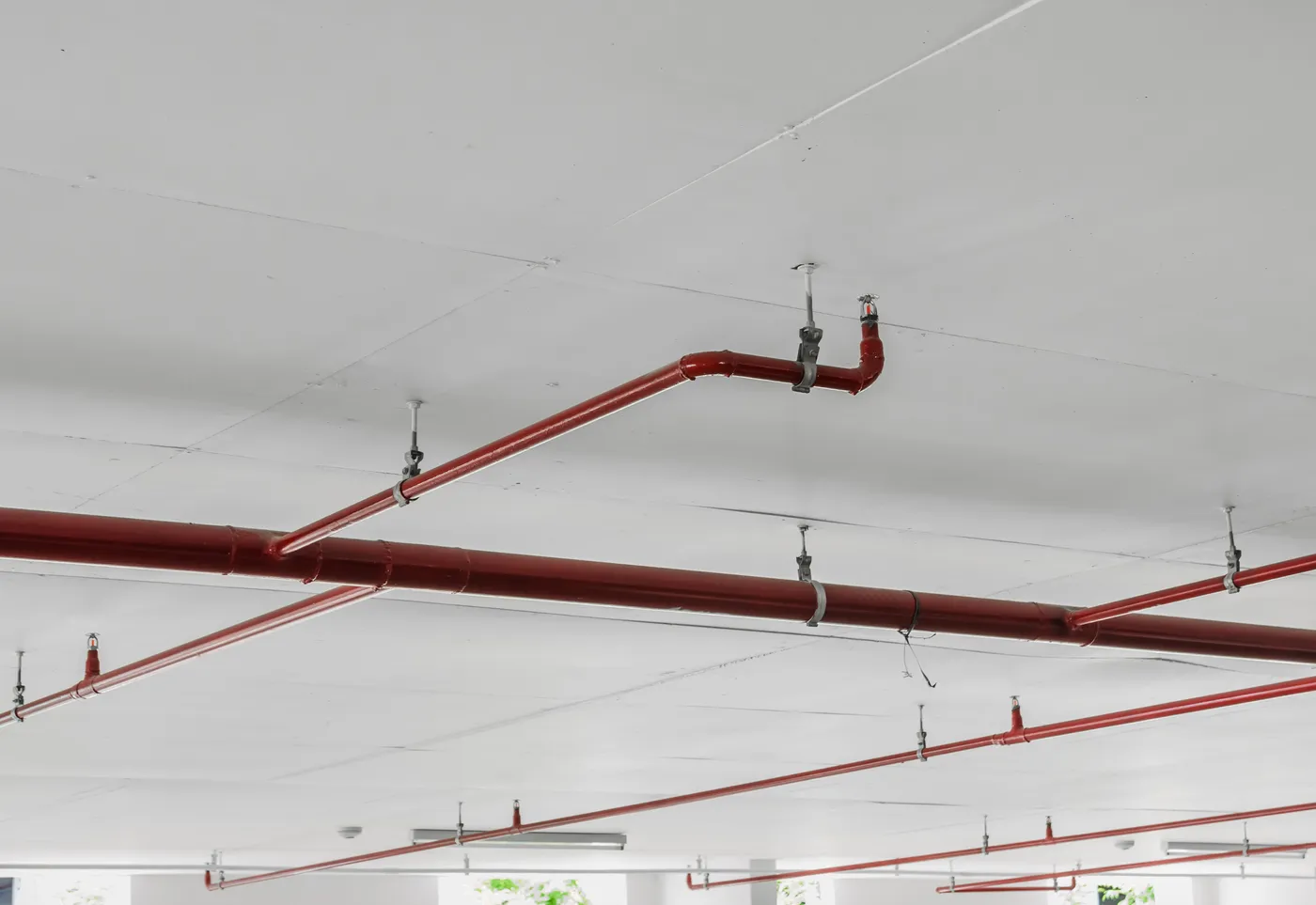
What is an automatic sprinkler system?
An automatic fire sprinkler system is a network of water-filled piping located in the ceiling or walls, designed to discharge water immediately upon the detection of heat. Unlike common myths, only the sprinkler heads closest to the fire activate, ensuring localized suppression while minimizing water damage to unaffected areas.
Everyday examples include the standard wet-pipe systems found in office corridors, the robust upright sprinklers in retail centers, and the high-output ESFR heads used to protect valuable warehouse stock.
Types of sprinkler systems
Wet-pipe Systems
Piping is constantly pressurized with water for immediate response upon activation.
Dry-pipe Systems
Piping is filled with pressurized air or nitrogen, used in areas subject to freezing.
Pre-action Systems
Requires a secondary detection event before water enters the piping; ideal for data centers.
Deluge Systems
Open sprinkler heads that discharge water simultaneously; used for high-hazard industrial zones.
Why it matters
Effective sprinkler design is the foundation of building safety, impacting everything from insurance premiums to structural integrity. Our design considerations include:
Occupancy classification and life safety objectives. Hazard and commodity classification for storage facilities. Water supply reliability and hydraulic optimization. Storage arrangement and racking configuration. Environmental factors such as freeze protection requirements.
How Lacuna approaches it
Assess
Comprehensive review of architectural plans and physical site conditions.
Analyze
Rigorous code and hazard analysis to determine design criteria.
Design
Hydraulic calculation and Revit-based spatial coordination.
Coordinate
Active AHJ coordination and seamless permit submittals.
Support
Ongoing construction support and project close-out documentation.
Applicable codes & standards
All designs are coordinated with the local Authority Having Jurisdiction (AHJ).
Where it's used
Send us your plans, get a scoped quote.
We'll review your project requirements within 48 hours.